

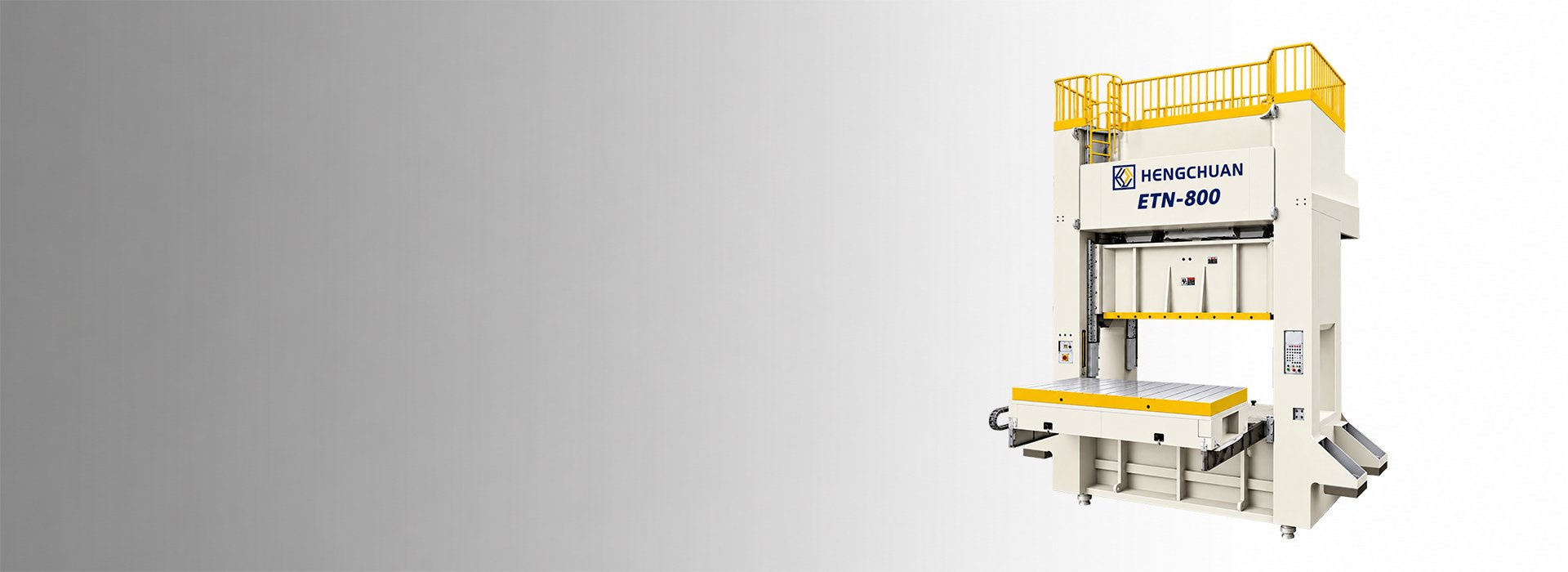
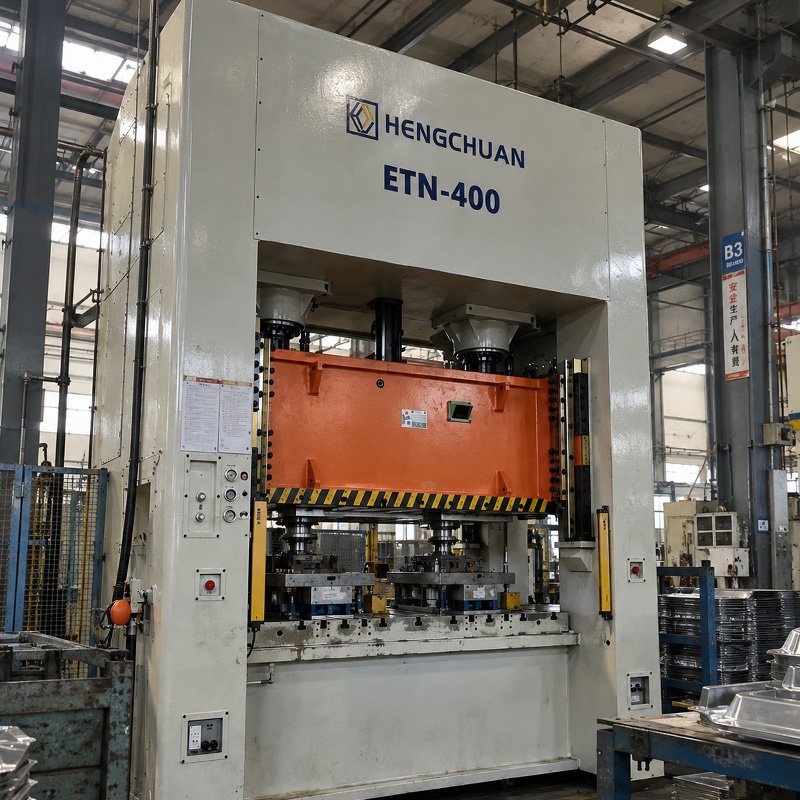
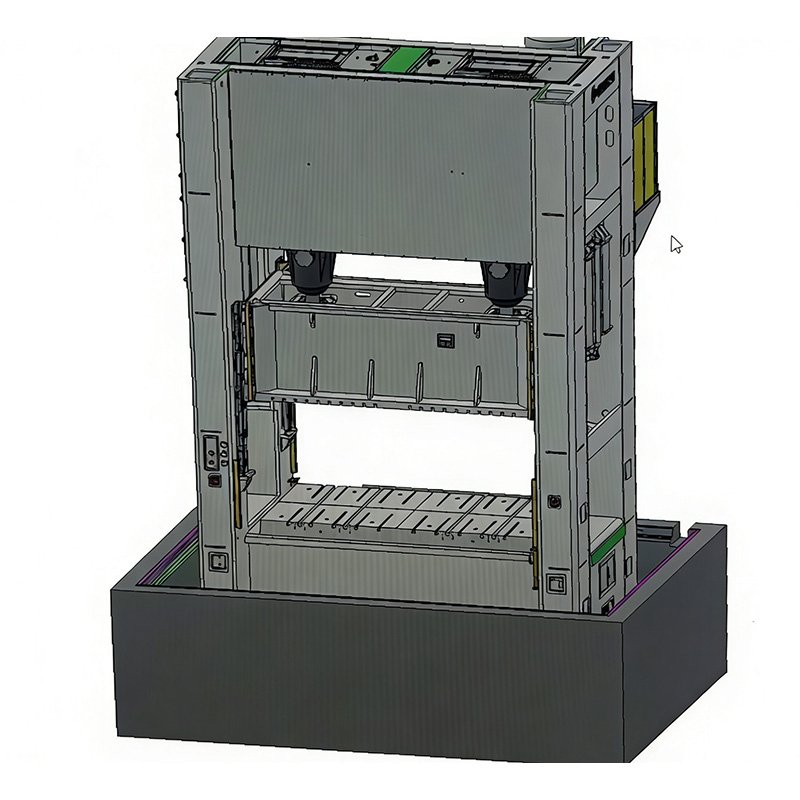
Key Features of HENGCHUAN Link Motion Press for Sale
- HENGCHUAN offer 300 tons to 1200 tons link motion press, and the delivery time is 26~30 weeks;
- The Multi-Link press machine is designed with high rigidity, small deformation, long-lasting and stableaccuracy;
- Optimized speed curve, longer stay time at the bottom;
- Effective energy distribution, saving environmental protection;
- Good overload protection performance,stamping thin and thick sheets accurately ;
- Stamping is smooth and the impact is minimal, the forming accuracy is high, and the mold wear is low.
Professional Link Motion Press Manufacturer in China
As a professional manufacturer and supplier of link motion presses in China, HENGCHUAN develops mechanical presses with multi-link drive systems designed to provide more controlled and optimized slide movement.
Compared with conventional crank presses, our Link Press uses a coordinated multi-link mechanism to create an optimized slide motion profile throughout the stamping stroke. This allows the link drive press to provide more suitable motion conditions for demanding forming applications.
The multi-link design is particularly advantageous for high-precision forming, deep drawing, complex shapes, and applications requiring stable and consistent stamping quality.
Whether you are looking for a link motion press for a new production line or an upgrade for an existing stamping process, HENGCHUAN can help you select the appropriate mechanical press solution according to your material, part geometry, forming process, production requirements, and target capacity.
Explore Our Link Motion Press
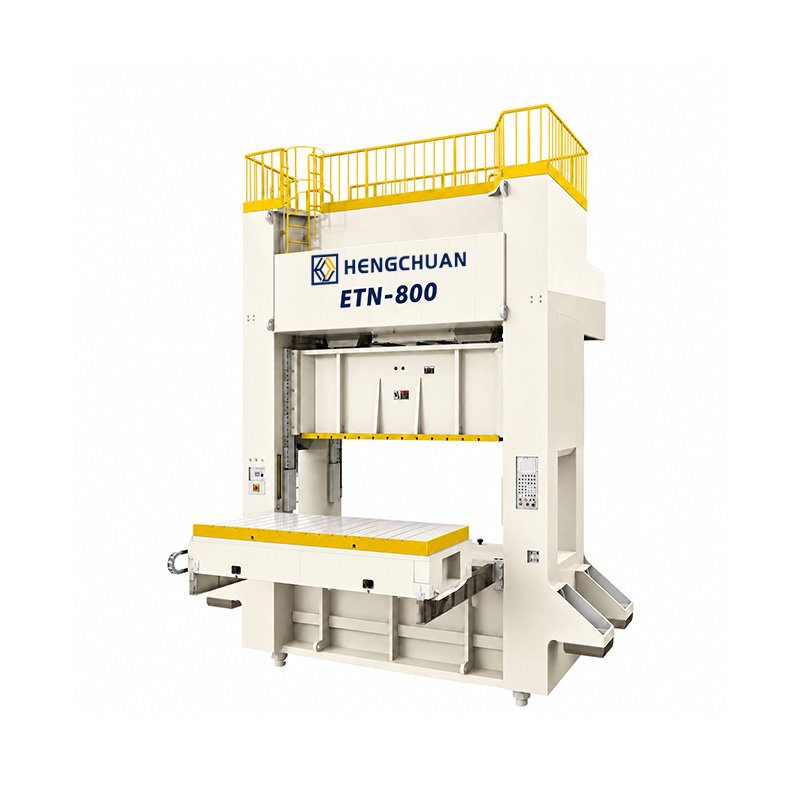
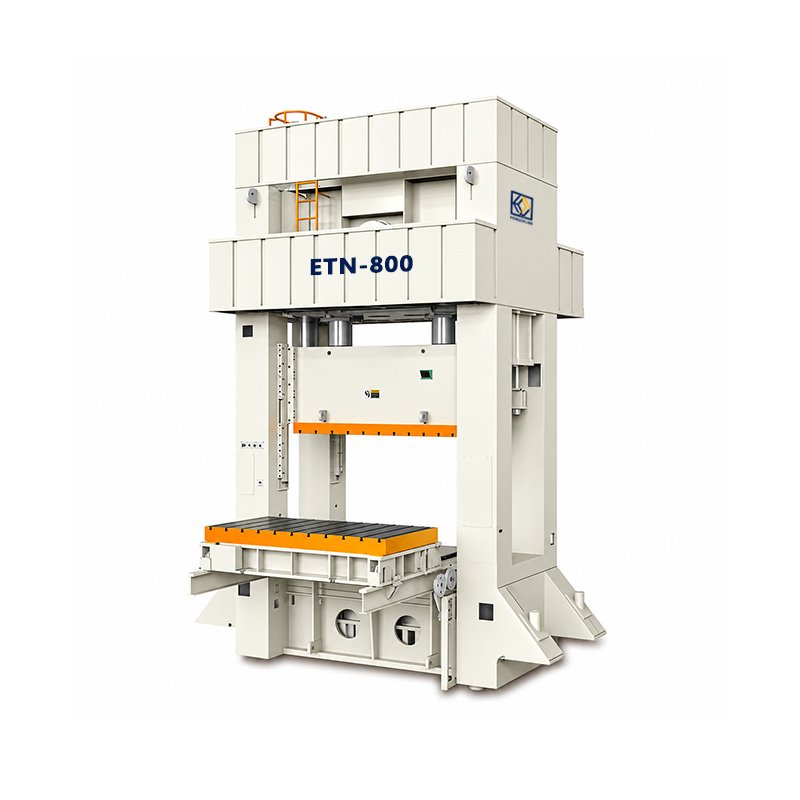
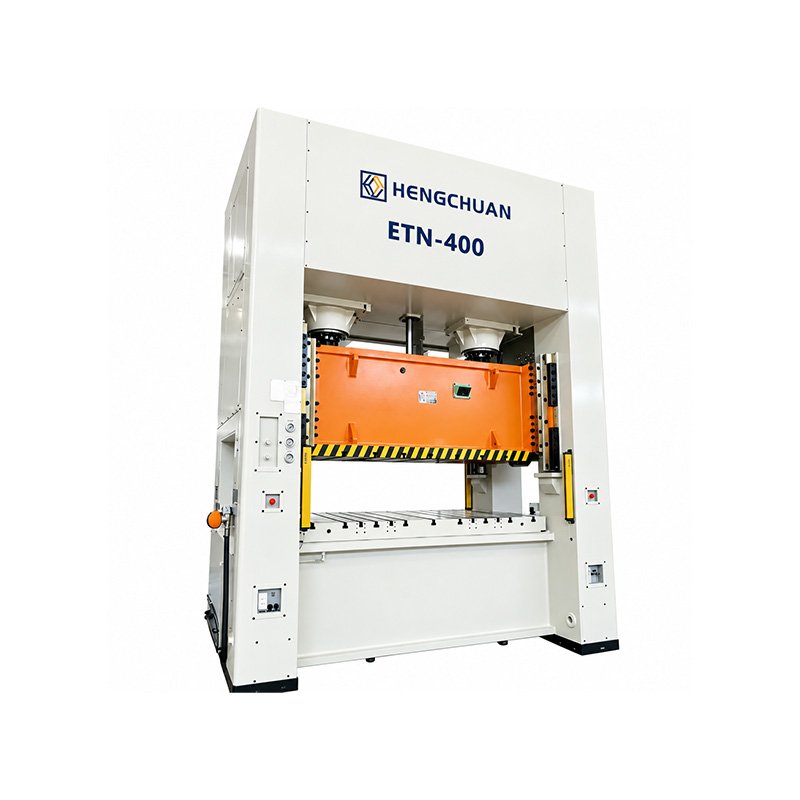
Why Choose a HENGCHUAN Link Motion Press
HENGCHUAN Link Motion Press is designed for stamping applications where conventional press motion may not provide sufficient forming control. Our multi-link drive system combines optimized slider movement with the high rigidity and productivity expected from a mechanical press.
 Multi-Link Drive for Better Forming Performance
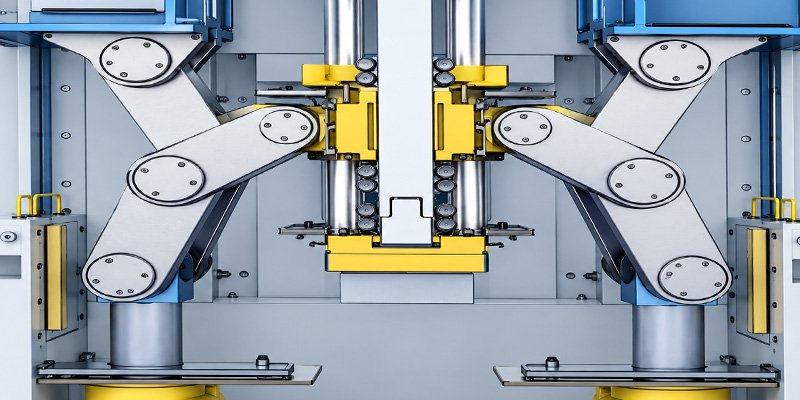
The multi-link mechanism is designed to create a more suitable slider movement for demanding forming applications. The coordinated movement of multiple links allows the press to achieve a specially designed motion profile throughout the stamping stroke.
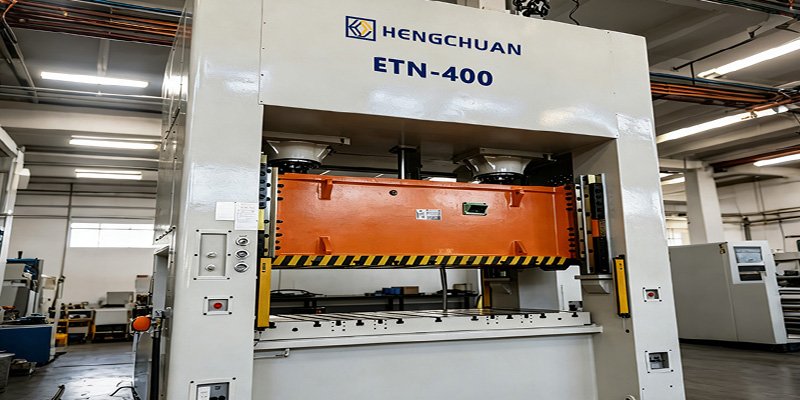 Optimized Slide Motion for Better Forming Control
Unlike a conventional crank press with a relatively fixed motion pattern, HENGCHUAN link motion press is designed around the requirements of the forming process. The slider motion is optimized to provide more controlled movement during the critical part of the stroke.
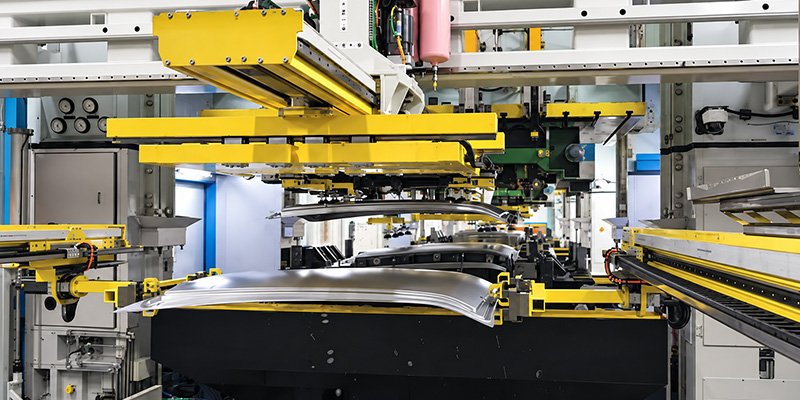 More Forming Time for Better Forming Quality
The optimized motion profile allows the slider to spend more time in the critical forming area without simply slowing down the entire stamping cycle. This provides more favorable conditions for demanding forming operations.
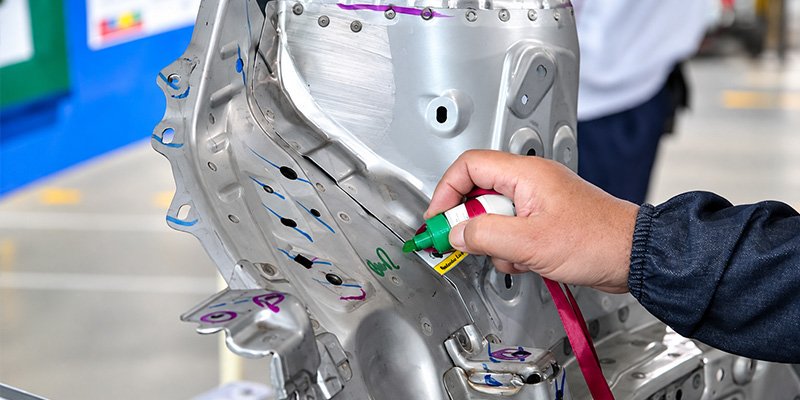 Faster Slide Motion for Higher Productivity
The link press maintains higher slider speed during non-forming portions of the stroke, helping reduce unnecessary cycle time and maintain production efficiency.
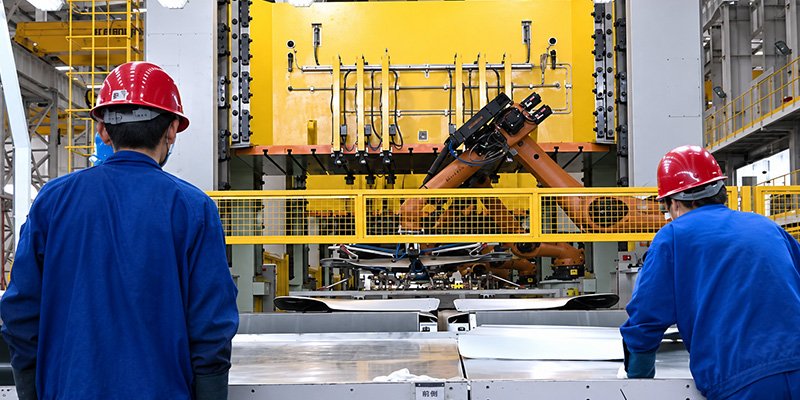 Stable Forming Quality for Demanding Applications
The combination of optimized motion and mechanical press performance makes HENGCHUAN link motion press particularly suitable for deep drawing, complex forming, high-strength materials, and applications requiring consistent forming quality.
Link Motion Press Applications: Where It Makes the Biggest Difference
For complex parts, high-strength materials, and components requiring strict forming accuracy. Conventional stamping processes may difficult to balance material forming, process stability and production efficiency.
Conversely, the more complex and demanding the forming applications are, the more Link Motion Presses can demonstrate their advantages.Here are some applications:
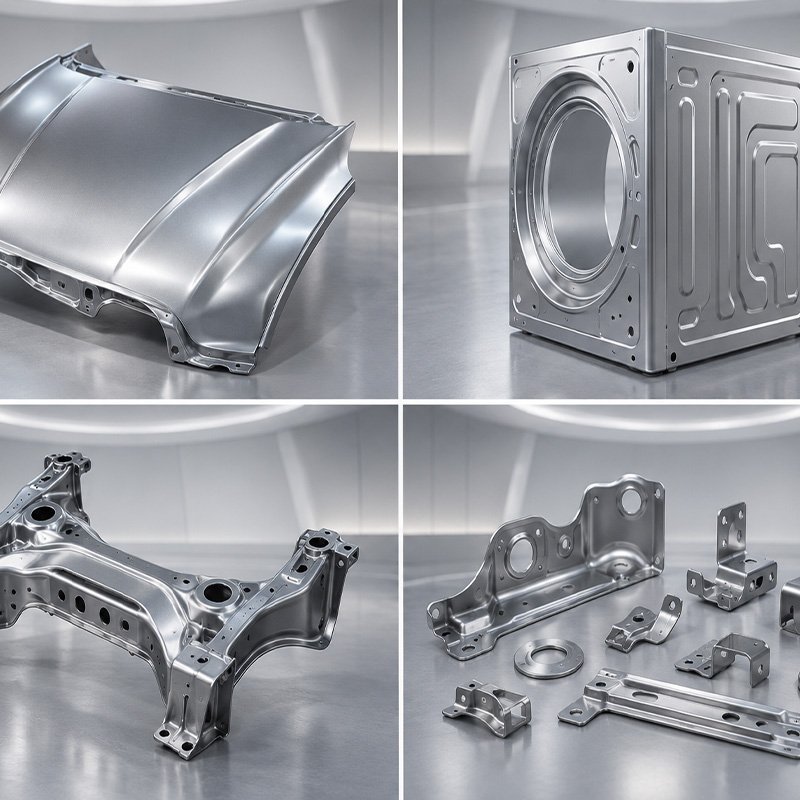
For large parts with a wide forming area, such as automotive body panels and washing machine panels, the material needs to continuously flow and deform along the geometry of the die.
In these large-scale forming applications, stable material flow can have a significant influence on the final surface quality and forming integrity of the part.
HENGCHAUN Link Motion Press is well suited to applications where material flow and complex forming are critical. It is particularly beneficial in areas involving corners, deep-drawing sections, and complex curved geometries, where need more controlled forming conditions.
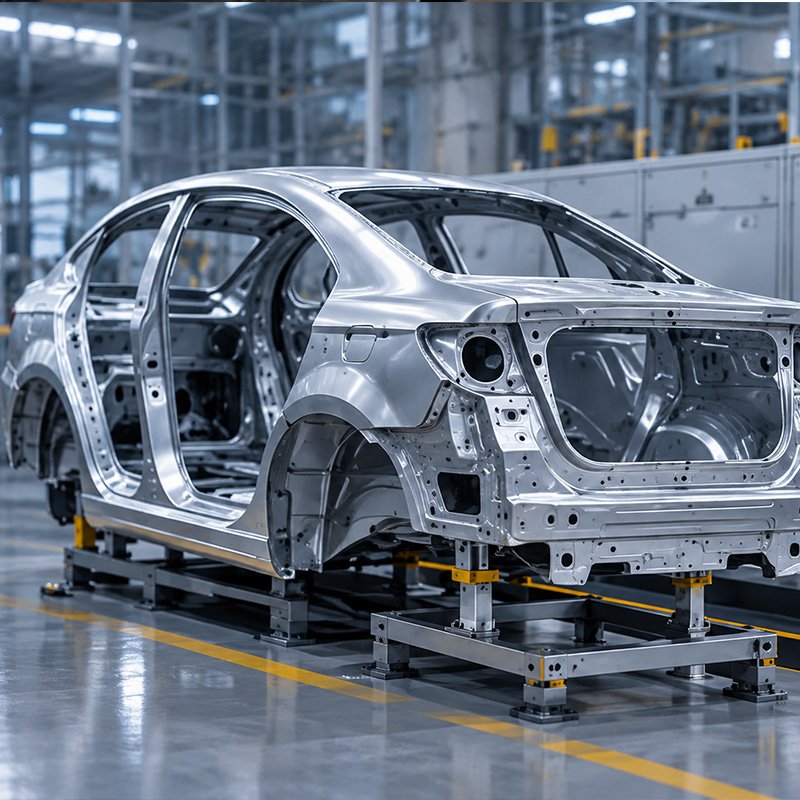
For some chassis structural parts and other high-strength components, the forming process can be particularly demanding due to the higher strength and lower form ability of the material.
In addition to the required forming force, stamping manufacturer need to consider material strength, spring back, cracking risk, and forming stability during mass production.
In these applications, HENGCHUAN Link Drive Press provides smoother and more controlled forming conditions, helping manufacturers better manage the forming process when working with high-strength materials.
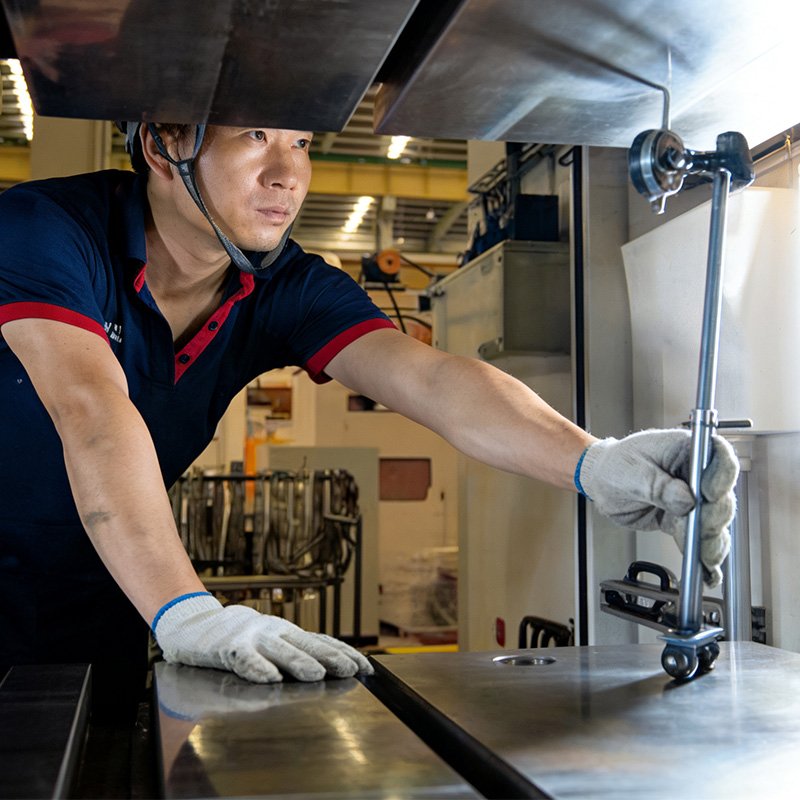
High precision is not only about achieving the required accuracy on a single part, it is also about maintaining consistent dimensions, geometry, and forming quality from part to part in the mass production.
For some precision stamping applications with high quality of size, shaped and surface, even small variations during the stamping process can affect the consistency of the finished parts.
HENGCHUAN Link Press provides a smoother and more controlled forming process, helping reduce process variation and maintain more consistent forming quality throughout mass production.
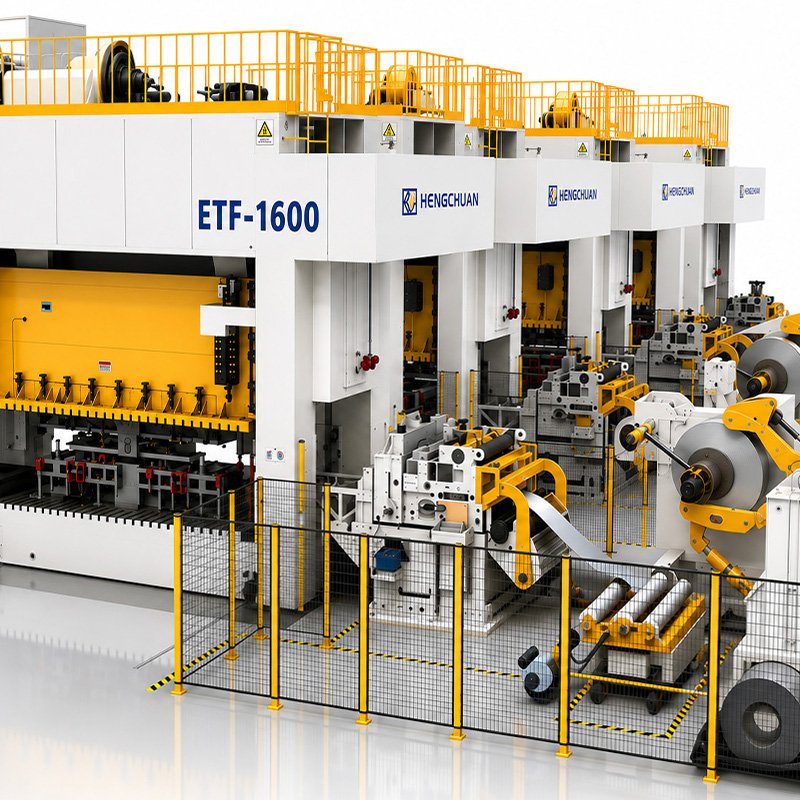
In progressive die and automotive stamping, productivity is not determined by SPM alone. More importantly, the press needs to maintain a stable and consistent production cycle throughout continuous operation.
For some automotive parts stamping lines, they not only need to maintain the stable material feeding , but also require high efficiency
For automotive parts stamping lines that require both efficient forming and continuous material feeding, our Link Motion Mechanical Press provides controlled movement during the critical forming stage while maintaining efficient non-forming movement.
This helps achieve a better balance between forming quality, process stability, and overall production throughput.
Key Design Advantages of HENGCHUAN Link Motion Press
Expected the multi-link mechanism, the performance of the whole press machine also is important, such as the frame, slider guiding and lubrication protection.
HENGCHUAN builds the press around the link motion mechanism while strengthening the structural foundation and integrating the supporting systems around it. Our goal is not simply to achieve a specific motion curve, but to ensure that our entire link motion press machine can operate accurately, reliably, and consistently in long-term production.
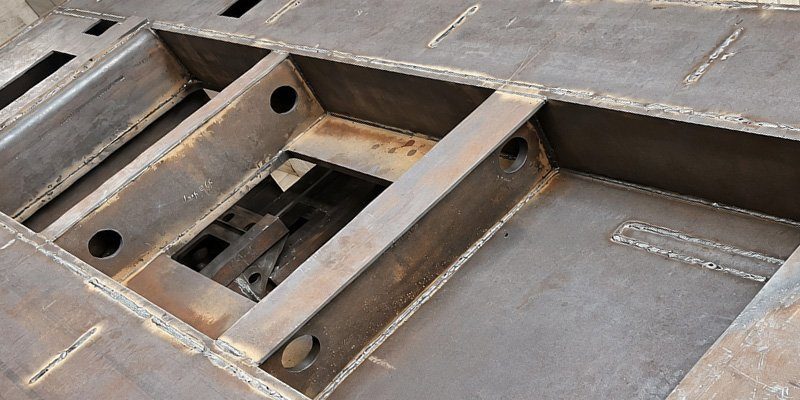
Precision Link Motion Press Machine is often used for large parts, high-strength materials, and complex forming operations, so the press frame must provide sufficient rigidity to withstand demanding forming loads.
If the frame undergoes excessive deformation under repeated stamping forces, even a well-controlled Multi-Link mechanism cannot fully maintain the desired forming accuracy and stability.
For this reason, HENGCHUAN places strong emphasis on frame rigidity, through optimized structural design and tempering treatment, to ensure our press frame deformation is minimized as much as possible, providing a strong and stable link drive press structural foundation for long-term production.
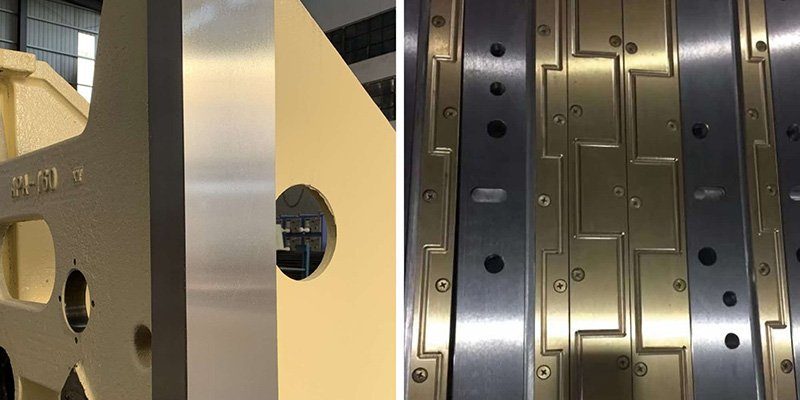
During the stamping process, the slider must not only withstand loads from the die and material, but also accurately return to its set position after each reciprocating motion. Therefore, for HENGCHUAN Multi-Link Press, the slider guiding system is also a crucial foundation for ensuring long-term stamping accuracy.
For good slider guidance, which is not merely about ensuring stable up-and-down movement of the slider; it’s about controlling the slider’s offset under repeated motion and load conditions, and maintaining good motion accuracy and positional stability. Our link motion press can helps maintain stable stamping accuracy and part consistency even in long-term, continuous batch production, it can reduce accuracy fluctuations caused by slider offset.
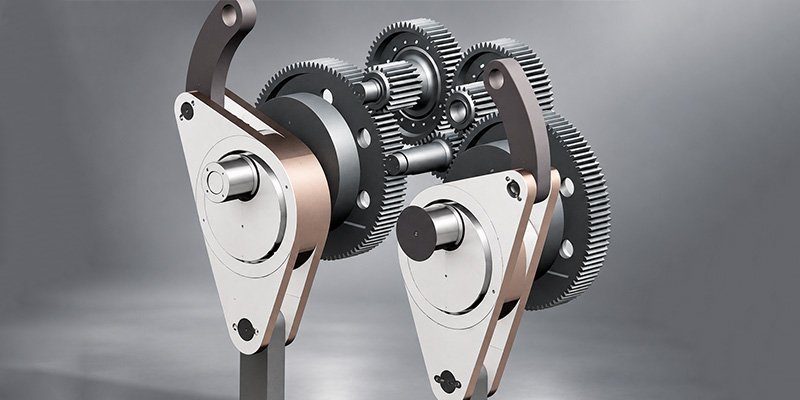
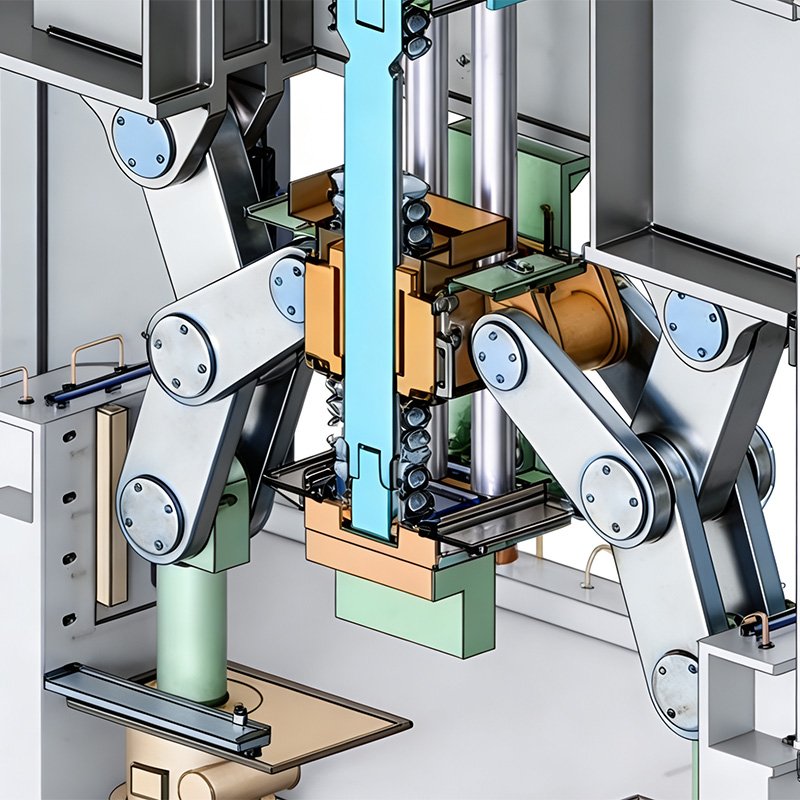
As the core link motion drive mechanism of the mechanical press, we focuses not simply on the number of links, but more importantly on the angular relationships and coordinated motion between the links, we need to ensure the slider achieves the desired motion characteristics.
During the actual forming process of our link motion stamping press, the forming angle range near BDC (Bottom Dead Center) can reach 180°–240°, this angle range can make the slider to remain a longer period and effective forming process in the critical forming zone.
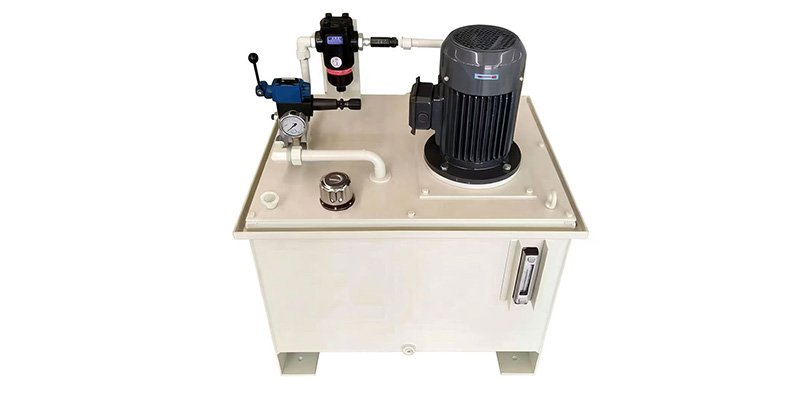
In our HENGCHUAN link press machine, the connecting parts and guides all adopts an electrical thin oil circulation lubrication system. The balancer is equipped with an electric thin oil lubrication system. The rest of the lubrication points that need to be filled with lubricating oil regularly have been clearly marked on the lubrication nameplate.
In terms of lubrication abnormal protection, the system adopts a progressive oil separator, and the main oil separator is equipped with a detection switch. If the oil circuit is blocked or the lubrication frequency is abnormal, the Link Drive Mechanical Press will automatically stop running and display an alarm message on the touch screen.
More About HENGCHUAN and Our products
Below is our standard parameter specification, if you have any concerning, please feel free to contact us.
- Technical Parameters
- Your Trusted Link Motion Press Manufacturer
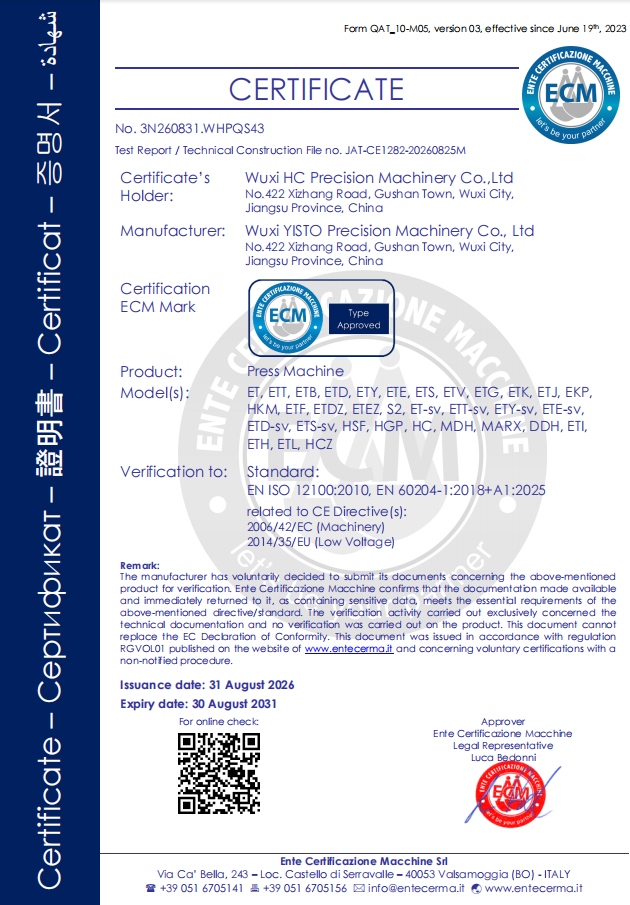
- CE
| Model | ETN-300 | ETN-400 | ETN-500 | ETN-600 | ETN-800 | ETN-1000 | ETN-1200 | ||||||||
| Type | S | H | S | H | S | H | S | H | S | H | S | H | S | H | |
| Press Capacity | TON | 300 | 400 | 500 | 600 | 800 | 1000 | 1200 | |||||||
| Rating Point | mm | 8 | 4 | 8 | 4 | 9 | 5 | 9 | 5 | 12 | 6 | 13 | 7 | 13 | 7 |
| Stroke Per Minute | SPM | 20-40 | 30-60 | 20-40 | 30-60 | 20-40 | 30-60 | 20-40 | 30-60 | 15-30 | 20-35 | 10-25 | 20-40 | 10-25 | 20-40 |
| Stroke Length | mm | 300 | 150 | 300 | 150 | 300 | 150 | 300 | 150 | 350 | 150 | 400 | 200 | 400 | 200 |
| Max Die Height | mm | 600 | 500 | 650 | 550 | 650 | 550 | 650 | 550 | 800 | 650 | 900 | 700 | 1000 | 800 |
| Slider Adjustment | mm | 150 | 150 | 150 | 150 | 200 | 250 | 250 | |||||||
| Slide/Bolster Size (Optional) | mm | 2500×1200 | 2800×1300 | 3200×1500 | 3200×1500 | 3200×1500 | 3500×1600 | 3500×1600 | |||||||
| 2800×1300 | 3200×1400 | 3500×1500 | 3500×1500 | 3500×1600 | 4000×1600 | 4000×1600 | |||||||||
| 3200×1400 | 3600X1400 | 3800×1600 | 3800×1600 | 4000×1600 | 4500×1600 | 4500×1600 | |||||||||
| Movable Bolster To The Ground Height | mm | 600 | 600 | 650 | 650 | 650 | 750 | 750 | |||||||
| Slide Opening | mm | 900×650 | 1100×700 | 1200×700 | 1200×700 | 1240×850 | 1600×950 | 1600×1050 | |||||||
| Main Motor | kW×P | 37×4 | 45×4 | 55×4 | 55×4 | 90×4 | 110×4 | 132×4 | |||||||
| Air pressure | Mpa | 0.6 | |||||||||||||
| Press Accuracy Grade | JIS I | ||||||||||||||



Link Motion Press Automation Integration
For the forming of complex parts and high-efficiency automated mass production, raw material must be continuously fed into the press, while finished parts and scrap need to be transferred out in time after stamping. This requires a complete automated production line that works in coordination with the press cycle, integrating material feeding, stamping, part transfer, and scrap handling into one continuous process.
HENGCHUAN can provide a individual Link Motion Press or do a customized automotive production line solution for your application.
If you are unsure about the press capacity or type of peripheral equipments, such as a Servo Feeder, Decoiler, or other automation equipment.
You can share your part drawings, or die information, and your technical requirements. Our engineering team will evaluate your requirements and help you determine the most suitable press and automation solution.
During stamping and forming, the angle range of the lower dead center is 180 degrees ~ 240 degrees, which is relatively long, this is suitable for forging and forming sheets with complex shapes.
The link drive press machine’s movement curve couldn’t be changed, while the servo press could achieve. The detailed information, you have check our servo press machine.
Because it has a more complex structure, the precision requirements is higher, and the R&D and maintenance costs also is high.
Yes. However, whether a Multi-Link Press is suitable cannot be determined solely by material thickness or whether the material is high-strength steel.
In actual stamping applications, several factors need to be evaluated together, including material strength, sheet thickness, part geometry and complexity, forming area, and die structure.
The advantages of an HENGCHUAN Link Drive Press become more noticeable when forming thicker, higher-strength, or difficult-to-form materials, where its slower and more controlled forming motion can provide better forming conditions. However, each application still needs to be evaluated individually.
If you are unsure whether a Multi-Link Press is suitable for your application, you can provide HENGCHUAN with your part drawings, material specifications, die information, and production requirements, and our engineering team will help you determine the most suitable solution.
The first thing to consider is what forming operations are actually included in the progressive die. When the die includes more demanding operations such as deep drawing, complex bending, restriking, or forming of high-strength materials, the situation becomes different. If several critical stations involve difficult forming operations, they can directly affect the stability and production speed of the entire progressive die process.
In this case, choosing an HENGCHUAN Link Motion Press is not simply about slowing down the entire progressive die production cycle. Instead, the goal is to provide a more suitable motion profile for the critical stations where significant material deformation takes place.
By allowing more effective forming time at these key stages while still maintaining the required production rhythm of the progressive die line, the link press can achieve a better balance between forming stability and production efficiency. This is where the real value of link motion in progressive die production becomes clear.
In blanking & punching applications, a link motion press becomes worth considering when processing thicker materials, when blanking loads are relatively high, or when noticeable impact and vibration occur as the material fractures.
In these situations, it is important to pay closer attention to the motion of the punch during the critical stage when it contacts, penetrates, and breaks through the material. At the moment of fracture, sudden load release can generate significant impact and vibration, and in more severe cases may lead to snap-through and reverse tonnage.
The purpose of using a multi-link press in this type of application is to provide a more suitable punch velocity through the material penetration and fracture zone, helping reduce the sudden impact and vibration generated when the material breaks and making the overall blanking process smoother and more controlled.
The choice between a multi-link press and a servo press mainly depends on whether your production requires frequent changes to the slide motion profile.
If your product range is relatively stable and the dies and forming processes are already mature, with little need to frequently change the slide motion curve, a link motion press is generally a more suitable choice.
On the other hand, if you produce a wide variety of parts, change dies frequently, or often need to adjust forming processes, a servo press provides greater flexibility in controlling and optimizing slide motion.
Both types of presses have their own advantages. The right choice ultimately depends on what you are producing today and how frequently your products and forming requirements may change in the future.
The main difference between the multi-link press and the knuckle joint press is the transmission mechanism and performance focus, the link drive mechanical press realizes the control of the slider movement trajectory through the combination of multiple connecting rods, which can achieve low-speed smooth stamping and long holding time at the bottom of the stroke, while the knuckle joint press relies on the dead center characteristics of the knuckle joint mechanism to generate great pressure at the end of the stroke, and the holding time at the bottom of the stroke is relatively short, but the two are for different process needs, the former focuses on the balance between precision and efficiency of complex forming, and the latter focuses on the force output under high-pressure conditions.
Related Product
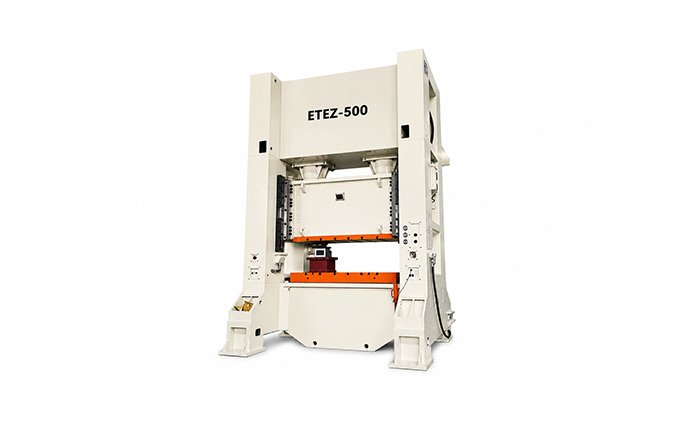
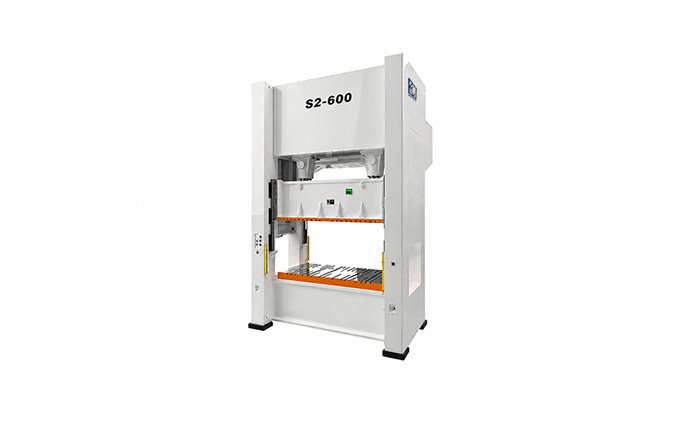
Model: ETEZ
Tonnage: 300~1600 tons
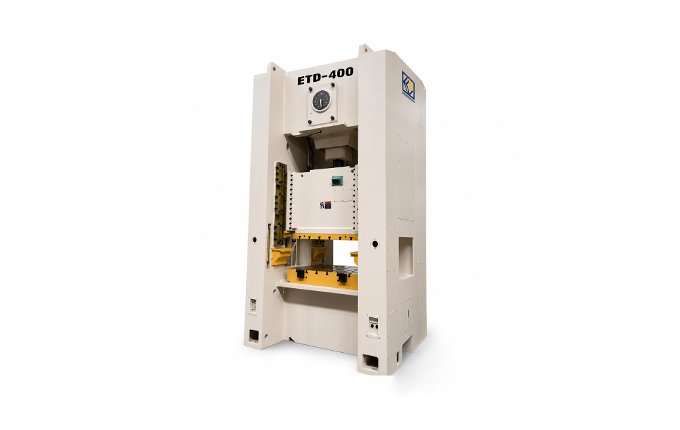
Model: ETF
Tonnage: 300~1600 tons
Model: ETD/Y/S/-
Tonnage: 300~1600 Tons
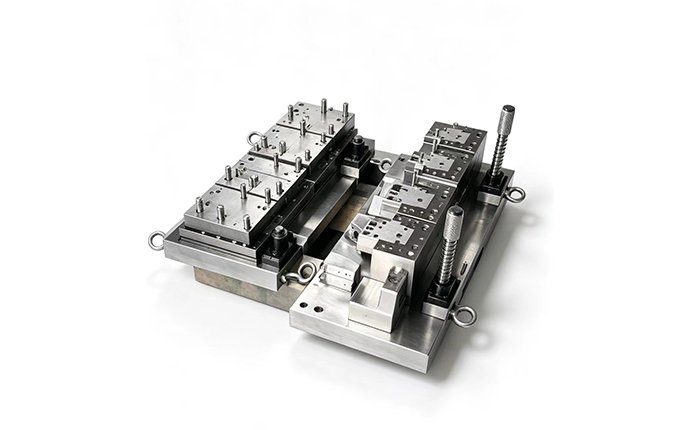
Provide a full range of molds.
HENGCHUAN Link Motion Press — From Better Forming to Better Production
Our link drive press machine could provide more time during the critical forming stage, which not mean our link motion press machine’s speed is slow, our link drive mechanical press could redistribute the time, when actual forming stage where the material need more time to flow and form, the speed is slow. While non-forming stage(return back and slide down time), the slider motion could be fast.
Slower motion in the important forming zone helps improve stamping parts stability, while faster motion during the non-forming stages helps maintain production efficiency.
For HENGCHUAN, the real purpose of Link Motion Press is not simply to answer whether the press can “move slower or faster.” What matters is whether its motion characteristics can bring real value to your stamping requirements and meeting your annual output.
If you are currently looking for a Link Motion Press Machine, contact HENGCHUAN. Our team can help evaluate the suitable press machine according to your parts, materials, dies, forming process, and production requirements.
Below Are Some Technical Questions About Link Motion Presses, We Hope They Can Help You
1.When Forming Becomes More Demanding
As part geometry becomes more complex, the forming process becomes more sensitive to how the material is deformed. Deep drawing, complex shapes, and high-strength materials can place greater demands on the stamping process.
A link motion press provides a motion approach specifically suited to these more demanding applications.
2.When Material Flow Matters
In complex forming, achieving the required shape is not simply a matter of applying enough force.
How the material flows and deforms during the process can have a significant influence on forming stability and final part quality.
This makes link motion particularly valuable where controlled material deformation is an important part of the production process.
3.When Tooling Performance Matters
The stamping process also affects the working conditions of the die.
More controlled forming movement can help reduce sudden mechanical impact during forming, creating more favorable working conditions for the tooling and press.
For manufacturers running high-volume production, stable tooling performance can be just as important as achieving the required forming result.
4.When Quality and Productivity Must Work Together
One of the key reasons to consider Link Motion is that forming quality and production efficiency do not always have to be treated as opposite goals.
The objective is not simply to run the press slower for better forming.
It is to make better use of the stamping cycle, providing controlled forming conditions while maintaining efficient movement during the rest of the stroke.
5.When Conventional Press Motion Is No Longer Enough
If your production challenges are related not simply to press tonnage, but to material flow, forming stability, complex geometry, or difficult materials, a link drive press may provide a more suitable solution.
It is not about replacing a conventional press for every application. It is about choosing the right motion technology when the forming process demands more.
The power is driven by the motor to the flywheel and transmitted to the multi-link combination mechanism, which converts the circular motion into a linear reciprocating motion of the slider.
Through the lever linkage and angular cooperation of the multi-link, the slider movement curve is accurately controlled to achieve slow and stable downward, with pressure retention and fast return stroke; The key is to use the motion characteristics of multi-link rods to avoid the defects of the fixed motion trajectory of the crank press and adapt to the needs of high-precision stamping and forming.
Traditional mechanical presses usually use a crankshaft and connecting-rod mechanism to drive the slide in an up-and-down reciprocating motion. In actual stamping, however, forming performance depends not only on the nominal press capacity, but also on how the slide moves during the critical forming stage.During this critical stage, the slide speed and motion curve influence how the metal material flows and undergoes plastic deformation, which in turn can affect forming stability and final part quality.
However,the core advantage of HENGCHUAN’s multi-linkage press is not simply adding multiple linkages, but how these linkages work together to reshape the slide motion curve throughout the stamping stroke.
By optimizing the motion relationship between the linkages, the slide can operate at different speeds throughout the stamping cycle. It maintains a higher speed during the approach and return stages, while slowing down during the critical forming stage. This optimized motion profile allows the slide movement to better match the actual deformation process of the material.
Compared with a conventional crank press, HENGCHUAN Link Motion Press therefore provides an optimized slide motion curve throughout the stamping stroke. This motion profile creates more favorable conditions for material forming, making it particularly suitable for stamping applications where material flow, forming stability, and forming quality are critical.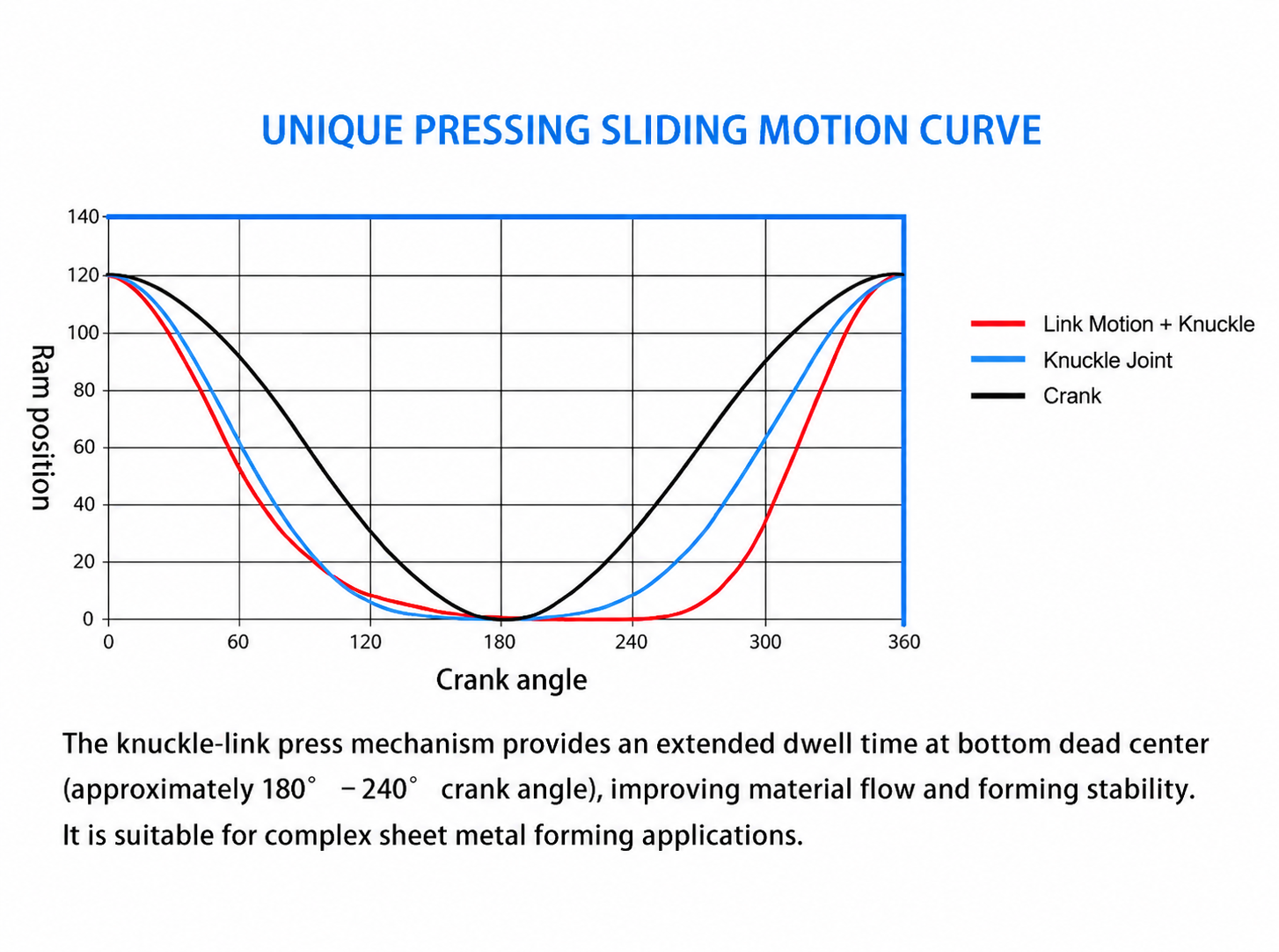
A Link Motion Press can help reduce springback in some forming applications, but it should not be understood as a solution that completely eliminates springback simply by using a Multi-Link mechanism.
In actual stamping production, springback is influenced by many factors, including material strength, part geometry, die design, and forming process conditions. Therefore, each application needs to be evaluated based on its specific requirements.
The purpose of HENGCHUAN’s link motion design is to make the deformation process smoother and more controlled, especially during the critical forming stage. By improving the stability of the forming process itself, it can help reduce or improve springback in certain applications, rather than relying on the multi-link mechanism alone to solve the problem completely.